

What a Roofer Actually Does, Day to Day
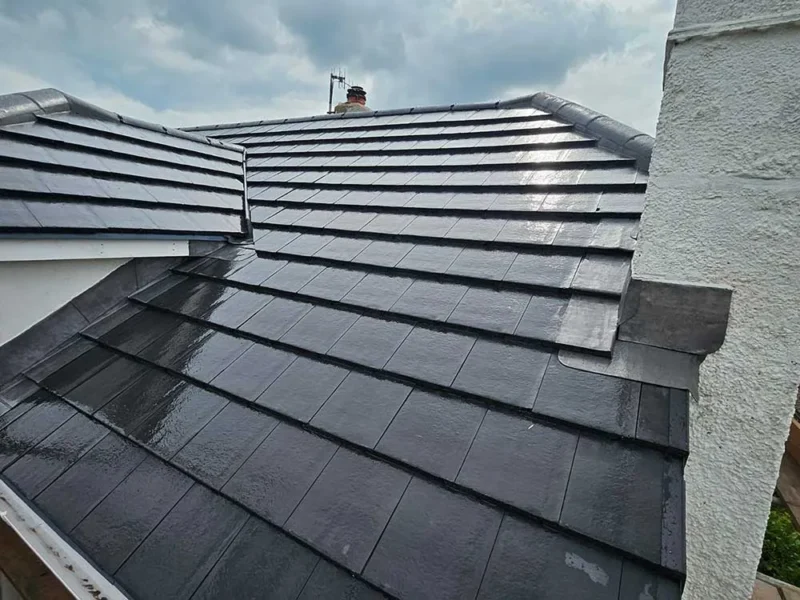
A roofer’s working day rarely starts on the roof. It starts with a van loaded to a specific job, a weather forecast checked properly rather than glanced at, and (on anything beyond a simple repair) a scaffold that has to be up, inspected and signed off before anyone climbs it. Once up there, the actual trade is a mix of assessment and execution: working out exactly why a roof is failing before touching it, stripping back only as much covering as can be made watertight again by the end of the day, and handling materials (clay and concrete tile, natural slate, lead, felt and membrane) that each behave differently in wind, heat and rain.
It is also, unavoidably, a trade practised at height, on a sloped and often wet surface, frequently metres from a road or a neighbour’s garden. The physical skill gets most of the attention; the judgement calls (whether today’s wind makes it safe to open up a section, whether a “quick repair” is actually masking a structural problem) are what separate an experienced roofer from someone who has simply learned to nail down tiles.
Pitched Roofs vs Flat Roofs: Two Different Skill Sets
“Roofer” covers two genuinely different disciplines that happen to share a job title. Pitched roofing is about shedding water fast off a sloped surface; the whole system, from underlay to ridge, is designed around gravity doing most of the work. Flat roofing is the opposite problem: water has nowhere to run off quickly, so the falls, the deck underneath and the detailing at every edge and outlet have to be got right, or the roof ponds and fails early. A flat roof on an extension or a garage is not a lesser version of a pitched roof. It is a different set of physics, and it shows when it is fitted by someone who has only ever really worked in tile.
The Trades Within the Trade
“Roofer” is really an umbrella over several distinct skills, and a roof rarely fails from the covering itself; it fails at the junctions between these skills.
Tiling and Slating
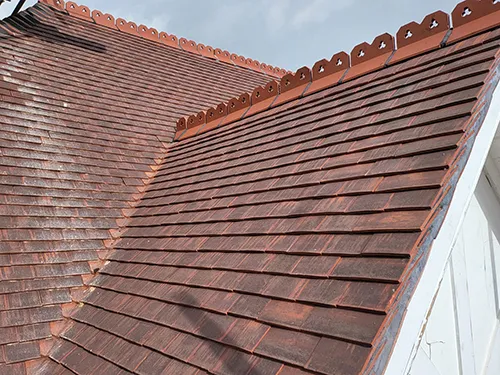
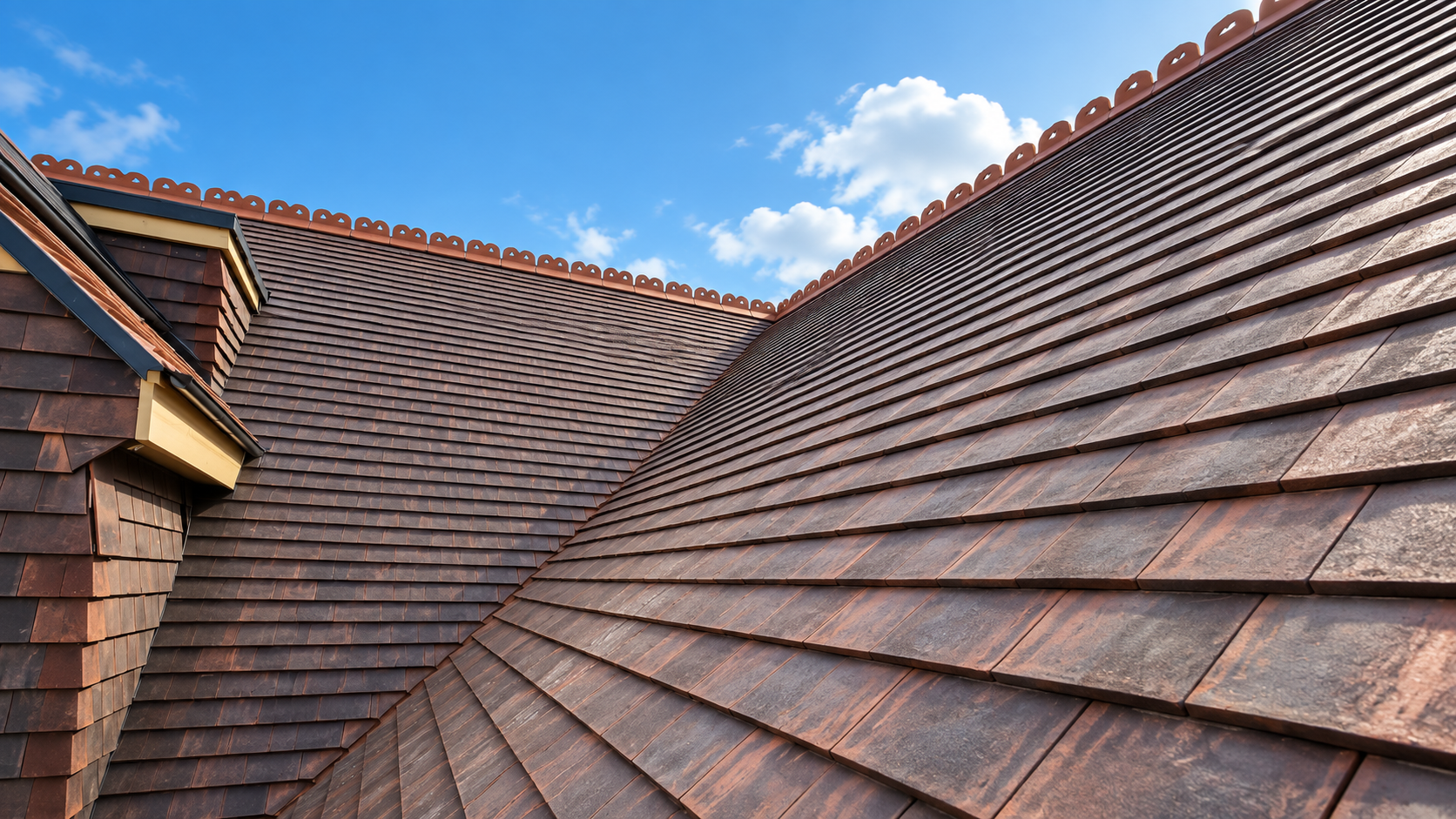
Laying tile or slate to the correct gauge and bond, setting ridge and verge so wind can’t get under an edge, and matching a covering to what a period property can actually carry structurally.
Leadwork
Chimneys, valleys, bays and parapets are where the vast majority of roof leaks actually start, not in the open field of tile. Properly welded lead cut to the right code, rather than sealant and hope, is the difference between a junction that stays dry for thirty years and one you’re calling someone back about after the first proper storm.
The Roofline: Fascias, Soffits and Guttering
The boards and gutter run at the eaves protect the rafter ends (the timbers holding the whole structure up) and keep the loft ventilated. A roofline capped over rotten timber, or guttering fitted dead level instead of to a proper fall, looks fine for a couple of years and then becomes a much bigger job than it needed to be.
Why Certification Actually Matters
A CSCS card confirms someone has been assessed against a recognised standard for working safely on a construction site. It is the baseline, not a bonus. Asbestos awareness certification matters specifically on Sussex’s older housing stock: a huge amount of pre-2000 property still has asbestos cement sheeting tucked into garage roofs, outbuildings and old flat roof coverings, and someone who doesn’t recognise it can turn a straightforward repair into a genuine health hazard. Lead welding certification is narrower still: it’s a specific, tested skill, and it’s the difference between a chimney flashing that’s actually welded lead and one that’s been folded over and sealed with mastic, which looks identical from the ground and fails within a couple of winters.
What Separates a Good Roofer From a Cheap One
Rarely the materials. Most roofers can source the same tile, felt or lead. It’s what happens underneath and at the edges: whether rotten timber gets replaced or capped over, whether the falls on a flat roof are actually corrected or just covered, whether a valley is formed in one continuous run or patched in short lengths that will split at every joint. None of that is visible on the day the job finishes. It’s visible five years later, in whose roof is still dry.
What to Ask Before You Hire a Roofer
- Who specifically will be on my roof? Is it your own team, or subcontracted labour?
- Can I see evidence of public liability insurance before work starts, not just be told it exists?
- What’s actually included in the price: scaffold, disposal of old materials, and making good afterwards, or are those extras?
- What happens if you find something unexpected once the roof is open? Is that priced before it’s done, or added to the invoice afterwards?
- Is the workmanship itself guaranteed, and for how long?
Why Subcontracting Changes Who Is Actually on Your Roof
This is the question worth asking directly, because the answer changes everything else about the job. A firm that subcontracts can quote you confidently and then send whichever crew is available that week: different skill levels, different standards, and nobody with a personal stake in whether the work holds up. It is also how “we’re fully insured” quietly stops meaning very much: the company’s policy may not extend to cover a subcontractor’s mistakes the way you’d assume. A team that never subcontracts has a much simpler incentive. The people who priced your job are the people who will be judged on it, because they’re the ones coming back if it doesn’t hold.